
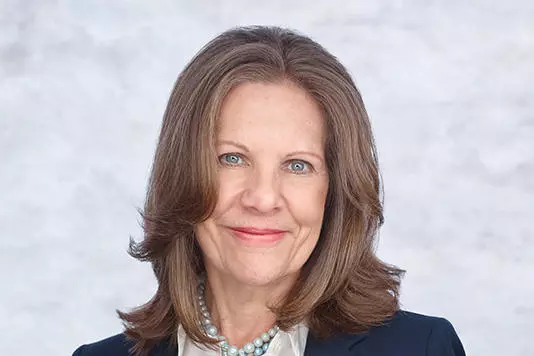
Dr. Monaco’s Colloquium Slide Show
Welcome Back! I hope you enjoyed our morning keynote and panelists and the breakout group you chose. We were very intentional in bringing voices from our community supporters, our alums, people who may not always serve as panelists, and our students. I heard good feedback. Thank you to our panelists and moderators who engaged us this morning and stimulated thinking for the groundwork of our Academic Master Plan.The events today take a lot of work and planning. We are very fortunate that Alexa leads our colloquium committee and pays attention to detail. The committee put together an excellent day for us. Thank you to Alexa Beshara-Blauth, Anthony Jordan, Debra Lee-Vasquez, Dawn Lorenzo, Melanie Parker, Donna Rosinski-Kauz. If you are interested in helping plan next year, please reach out.
This was Dawn’s first colloquium in which she was charged with logistics, breakfast and lunch, and all the little details. Thank you, Dawn, for jumping right in and handling everything so professionally.
Please allow me to acknowledge and thank the behind-the-scenes people: Mary Granahan and her staff, Heidi Sheridan, Laura Westmoreland, Bryn Farace, Kevin Braendly, Ben in the control booth, and all the others who helped
I appreciate our Sign Language Interpreters who are with us today.
I owe a tremendous debt of gratitude to Lisa Daly. Few things are as boring as listening to a speaker go on and on without something to focus your attention, other than a voice. Lisa designed the slide show for this talk, but the design also included finding photographs, doing research, helping with the order of topics, and providing, with Connie, editing and polishing. Thank you, Lisa.
Just a reminder that the raffle will occur at the end of this state of the college.
Now, let’s begin a review of the summer and what is ahead for us.
Our Summer Camps were once again a success through our partnership with Blackrock. As you can see from the slide, we offered a variety, and certain camp experiences were very popular. Thank you to Anne Finis and Ilene Cohen for their leadership again this year.
In addition to these young people on campus, we also enjoyed a healthy summer school. Overall, summer headcount increased by 2.8% over last year, while credits increased by 2%. As you can see from the slide, enrollment, credits, and visiting students all showed increases year over year, and over half the summer students were visiting students. We welcomed visiting students from 70 different colleges and universities, including Rutgers, Penn State, Georgia Tech, and the University of Delaware.
The summer also provided some great out-of-class experiences. In July, Karin Gargone took several of her organ students on an organ crawl. One highlight was the Hope-Jones-Shaw organ in the Great Auditorium in Ocean Grove, which is one of the 20 largest organs in the world. Of particular interest is the digital organ at the United Methodist Church in Island Heights, as Tom Van Duyne, who works in our IT department, built the organ. (photos)
July was an excellent month to enjoy the arts. Our Ocean County College Repertory Theatre performed My Fair Lady, earning standing ovations for several performances. Not only was this an excellent production, but it also achieved the distinction of being the highest-grossing summer musical to date and had the third-highest attendance. Congratulations, Paul. (photos)
In addition to these artistic and cultural enrichments, we witnessed several building arts.
Construction is booming on our campus. The new Admin Building advanced greatly over the summer, and the Grunin Center expansion is on target for the December 9th Grand Opening. In addition, the ICCT building will be transformed into the new home for the School of Workforce Education classes. Kudos to Ryan Ward and our facilities crew for the carefully partitioned space in Hovnanian as the new dental hygiene and radiography program spaces are being built. Thank you to the nursing faculty and students for their good spirits during this transition. (photos)
We now have a fifth school: the School of Workforce Education joined the School of Arts and Humanities, School of Business and Social Sciences, School of STEM, and School of Nursing and Health Sciences. Dean Aslihan Cakmak began as the inaugural dean in July and is working with her staff and her fellow deans to determine how to make this a distinctive school to serve our public through certificates, short term programs, and degrees.
We welcomed many new faculty and staff over the summer, and several people also enjoyed promotions or changes in positions. The names of those people were shared as you arrived. Could all people new to their position please stand?
Thank you. Please allow me to mention a few people.
We welcomed six new CLIIs, as you can see on the slide. If you have not yet met these new faculty members, I urge you to do so. They have brought enormous energy and passion to the College through their dedication to our mission. I believe Patrick and Fernando may be honorary members of the STEM school, given the great connections among our new faculty
- Frank Malatino – CLII Physics (New hire)
- Patrick Hurler – CLII Nursing & Health Sciences (previous Adjunct)
- Matthew Jakubowski – CLII Mathematics (previous Adjunct)
- Frankie Mennicucci – CLII Mathematics (previous Adjunct)
- Fernando Garcia – CLII Business (New hire)
- Jasmine Porter – CLII Chemistry (New hire)
We are also delighted to welcome a new AVP for Marketing and Communication, Ted Ishler. Ted is joining us from Milwaukee, WI, and is on route as I speak. You will have an opportunity to meet him after he begins his new position on Monday, September 14th.
As most of you are aware, our Counseling Center is one of the busiest offices on campus. I hope you had a chance to visit their Center yesterday, following the Teaching and Learning Institute. An excellent example of collaboration between academic and student affairs occurred, as student support services hosted tables during the Institute and Richelle Corbo and her staff welcomed faculty to a lunch following the morning Institute. In addition to seeing the space, I hope you also welcomed two new hires: Aida Hernandez, the Assoc. Dir. and Alejandra Sanchez-Medina, the Mental Health Clinician. These two new bilingual members of the Counseling Center extend our ability to help students who may be more comfortable sharing concerns in their native language. Richelle shared that the Center is so busy helping students through their language skills, they are pinched for time to do their regular duties.
This summer we promoted Neil Mastroianni into a new position as the inaugural director for the Center for Teaching and Learning. He has been doing great work with Catherine Mancuso on the Teaching and Learning Institutes, but we have reached the point that we need a fully developed center that can teach new technologies, house the instructional designers to help work on course design, and provide a space and expertise for both faculty and students to talk about how we teach and how we learn. Thank you to all the presenters at this year’s Institute.
Another change into a leadership role occurred with the Barnegat Bay Partnership, as Andrew McGowan assumed the role as Director Those who attended the President’s Pop-In last week had the opportunity to meet Andrew and learn about the fascinating work of the Barnegat Bay Partnership and its efforts to protect this important resource in our community. The opportunities for collaboration and experiential learning for students are numerous and exciting to explore.
Our search for the EVP of Academic and Student Affairs has restarted with the assistance of a search firm. ACCT is managing this work, and Brad Ebersole, whom some of you will remember from my search, is our consultant. You have received the Broadcast from HR, and I hope many of you are interested in serving. The goal is to identify and hire our new EVP for a January 1ststart date. Please see the timeline for this search. Although we hope to have a new EVP in place for the spring semester, we also recognize that a candidate could have a contract that will not allow a mid-year start.
As part of the college reorganization, we are giving careful consideration as to the right structure for Career Services. A taskforce, co-chaired by Anna Regan and Neil Mastroianni, will make recommendations to me by mid-September. Thank you to this very productive team and to Anna and Neil for providing excellent leadership, and I look forward to sharing their recommendations later this month.
Yessika Garcia Guzman returned home to OCC in early spring and immediately saw the need to create a different kind of HUB, this one focused on student support services. Since early summer, Yessika and an advisory team have focused on the design and purpose of what they are calling The Collective. Bringing enrollment services and advising into a central space enables students to enroll for classes easier through the one-stop design. We need to provide the same ease to students who might benefit from counseling, Helping Hands, EOF, TRiO, or other forms of student support. Yessika is leading a dynamic team to develop the theoretical framework and recommendation for this new Collective.
In June the NJCCC hosted the annual NJ Pathways to Career Opportunities Summit in Atlantic City. OCC was able to send the largest team from a community college, as people commuted back and forth each day. The summit provided an opportunity for people from academics, student services, student life, IR, student conduct, grants, human resources, the tutoring center, and others to learn and collaborate as one team. OCC staff provided two presentations: Sheenah Hartigan and Jim Campbell spoke about “Early Intervention: We’ll See – Isn’t a Strategy,” and James Marshall, Catherine Mancuso, and Alexa Bashara- Blauth shared our Pathways journey.
The summer also saw the appointment of three new Board of Trustee members. The County Commissioners appointed Carmen Memoli, CPA, to a term starting July 1. Mr. Memoli is also an OCC graduate. Governor Sherril also appointed a new Board member, Terrance Turnbach. Mr. Turnbach is a Toms River attorney who is active in the community. We also welcomed the new Alumni Board member, Annellie (Nellie) Lopez, a mathematics graduate this past May who is pursuing a degree in chemical and biomolecular engineering. We have one vacancy remaining to be filled.
Our student-athletes also had an outstanding year, with 11 programs earning NJCAA All-Academic Team honors for achieving a cumulative GPA of 3.0 or higher. And on the court, our Men’s Volleyball team, led by Region 19 Coach of the Year Jose Rafael, finished second in the nation at the National Championship tournament with an impressive 16–4 record.
Congratulations are in order for the swift negotiation of a successful FAOCC Contract. Thanks to David Bordelon, president of the FAOCC and his team, and the negotiation team of Sara Winchester, Catherine Mancuso, and Cara Dubitsky, this contract was settled in the shortest time in OCC history. I am also delighted to share that the College Lecturer contract is with membership for review. We hope to bring this to the board later this month. Thank you, Dan Ward, for your leadership in this inaugural contract negotiation and to the CL II team who participated.
The partnership with Community Medical Center continues to deepen under the new leadership of President and CEO Aaron Hajart. We met several times over the summer to talk about some exciting opportunities with nursing and to collaborate on other healthcare programs under development. We are particularly honored that CMC named Ocean County College the recipient of the Healthcare Partner award. Tracy Walsh, Danielle Piccione, and several of our nursing students who work for CMC were interviewed prior to the celebration to occur on September 25th.
We launched a radio ad campaign with Press Communication that includes drive time promos as well as a social media campaign. Thank you to alum Erin Elizabeth, SGA President Trish Morales, our own tutoring center director Brianna Cardinale, and our alum and employee, Mariely Quinto Sanchez.
In case you have not seen them on social media, here is Mariely, an OCC graduate, Stockton student, and current employee. (VIDEO)
The ad campaign and social media campaign are examples of the many ways we try to bring awareness to the public that classes are beginning. Fall enrollment continues to reflect some of the challenges facing higher education more broadly. Overall headcount is currently down 5% compared with last fall, while total credits are down 6.2%. Before getting overly concerned, it is important to note that these numbers reflect a drop for non-payment this week. 269 students were dropped—not a huge number, thanks to the outreach by Sheenah’s team to students—and already 30% are re-enrolled. We will see new numbers soon.
Within those numbers, however, we are seeing some encouraging trends. First-time student enrollment increased 3.3%, with 1,933 first-time students joining us this fall. We are also seeing modest growth among our non-traditional students, with enrollment up approximately 1% and credits up slightly from last year. While we continue to focus on overall enrollment, these areas of growth are important as we work to understand our changing student population and respond to the evolving needs of the communities we serve.
SLIDE 17 – LOOKING AHEAD: possibilities
As you can see, the College was busy over the summer. Gone are the days of the quiet summer. Let’s now turn to some of the initiatives and possibilities we will explore and pursue during this academic year.
The integration of Academic and Student Affairs continues. The new EVP will be crucial to this work, as three of the four AVPs will report to this individual and all will work as a team to continue to improve how we provide the academic offerings and wrap around support and services students need to realize their ambitions. Deans are meeting with the enrollment team and advisors to share how to sell what we offer to prospective students and families. Our weekly enrollment strategy meetings now include people from student services and academic affairs. We must embrace not two sides of the house, academic and student, but one integrated whole, staffed by people who understand our students, our offerings, and how to continue to respond to our evolving student population and community.
As you are aware, if you attended the morning sessions, the Academic Master Plan is underway. Your work this morning will help guide the team on the areas we need to focus on as we also ensure the alignment with our strategic plan. Throughout the year, the Academic Master Plan Planning Team will meet to develop this work. The members of the team are shown on the slide:
Pathways, Part II
Thanks to everyone here, we had a successful launch of the Pathways Project. It was a huge undertaking, and because of your commitment and your collaboration with others, we met the timeline and the goal. We are now beginning the next phase of refinement. Over the summer, a team that included academics, enrollment, advising, and the registrar’s office began meeting on a regular basis to address inconsistencies in the catalog, in the program plans, or in the processes. It has been a highly productive series of meetings.
Over this next academic year, we will focus on further refinement of Pathways, based on evidence from enrollment, feedback from faculty, staff, students, and the community, and a dedication to enhance the student experience. James Marshall articulated this work of this Pathways phase: “Building upon the foundational work of Pathways Phase 1, this next stage shifts the focus from organizing programs to helping students explore, engage, progress, and succeed through clearly defined educational and career pathways.” Let’s take a look at what this means, as shown on the slides.
Again, under the leadership of James Marshall and Catherine Mancuso, and with your wisdom and experience working with students and the community, we will provide an excellent student experience within the Pathways Model. We have the program, so now we can focus on how students experience learning in this new model. You can see several different interwoven initiatives, from enhancing the pathways to developing a master plan that reflects the pathway curriculum.
We want to learn how students actually experience the pathway model and ensure our materials, whether printed or digital, reflect the lived experience.
STSC is undergoing a redesign to reinforce principles of Pathways, and we will begin the integration of the NACE competencies throughout our curriculum.
As noted earlier, workforce credentials matter to students, and we have opportunities to build our workforce school.
We will offer events that engage all our communities in the power of Pathways.
SLIDE 27 – Program Portfolio (we will continue to build programs and certificates that respond to demand)
SLIDE 28 – Academic Master Plan (our academic vision is grounded in our offerings, workforce, and resources)
SLIDE 29 – Continuous Improvement (we know we must continue to be responsive to student needs, workforce demands, and changing times)
All of which lead us to the 2027 Destination:
- Better Student Navigation
- Career Readiness
- Responsive Academic Portfolio
- Data-Informed Decisions
- Continuous Improvement
SLIDE 31 – SHAPING NEXT STEPS: innovations
In addition to these enhancements to our current work, we have some new initiatives to launch this fall.
I am thrilled to share the exciting vision Justin Pfeiffer has for The Voices Center for Genocide, Human Rights, and Justice. Justin has begun the work on this ambitious project, working with Jim Calamia for a space, building an advisory board, working with Sara Winchester on a budget, and mapping out the vision. The Voices Series will anchor the Center’s programming. It will bring testimony, conversation, and challenging questions into one place. These events will include literature, justice, testimony, memory, and research, to name a few ideas. I was delighted to hear that word of this work is already out, for we have not one but two full sections of the History of the Holocaust class this fall.
Mark Westmoreland is directing another important project for us, focusing on Character Education. Mark and a group of faculty and staff met during the summer to talk about what Character Education means, and Mark has built upon his relationship at Wake Forest University, which spearheads the work in character education and directs grants to support this work elsewhere. I am excited to see what the committee proposes. And if this looks interesting and exciting to you, please reach out to Mark, who would gladly welcome more contributors to the thinking and planning.
Last year, a group of faculty and staff met informally to talk about the ways in which AI was transforming education. That nascent group is the AI Taskforce. In support of Goal 1 in OCC’s Strategic Plan, the taskforce has been meeting this summer to lead the development of policy and guidelines that the College will use for Artificial Intelligence.
- Policy updates to Policy #5180 are expected to be submitted for Board approval at the September 2026 Board of Trustees meeting. The policy will cover definitions pertinent to AI and students’ general responsible AI use. The guidelines will include incorporating AI into curriculum, course assignments, detection methods to determine policy violations, and authentic assessments to mitigate AI use.
- Several forums will be held in Fall 2026 on various AI related topics to better educate faculty and students on how AI continues to evolve and thus continues to impact teaching and learning.
- This information regarding the appropriate use of AI will be displayed on OCC’s public-facing website.
Please see the members of this AI Taskforce Members (see slide).
In addition, courses are being developed or redeveloped to include education on artificial intelligence and how to use AI responsibly. AI content was embedded into the existing CSIT 110: Introduction to Computers and Computer Applications course. This course will help many students understand how to use AI appropriately, as students often take this course to satisfy their technology requirements. In addition, the School of STEM will offer a new course, “Artificial Intelligence Literacy” that will give students essential AI skills for college and the workforce. We anticipate this course will be offered in Spring 2027.
And as AI technology advances, students should learn to use AI as a tool that extends thinking, rather than one that replaces responsibility. The following OCC faculty members were awarded the NJCCC AI-ready faculty mini grant. Award recipients received a $1,000 mini-grant, paid by NJCCC, to support the design, implementation, and assessment of AI-enhanced instructional activities in Fall 2026. (slide). Last Friday, Catherine shared with the deans a second round of AI Readiness Faculty Mini grants. I hope more of you will submit your ideas about how to use AI in teaching.
We often talk about AI in higher education in terms of writing, research, and academic integrity. But AI is also beginning to change how work is actually performed within disciplines.
Two recent examples from science caught my attention. Researchers are using AI to better understand what happens in the laboratory—capturing aspects of experimental practice that traditional documentation may miss and helping scientists understand why the same experiment can produce different results. In meteorology, AI models are changing hurricane forecasting, providing scientists with new tools to predict a storm’s path and intensity. But in both cases, human expertise remains essential. Scientists still need to interpret what the technology is showing them, evaluate its limitations, and make informed judgments.
What I find particularly interesting about these examples is that the technology is not eliminating expertise. It is changing what expertise looks like.
And that raises an important question for us as educators: If the way work is being done within a discipline is changing, what does that mean for what—and how—we teach?
Which foundational skills remain essential? Which practices need to evolve? What new capabilities will our students need when they enter these fields?
As AI continues to reshape professional practice, our responsibility is not simply to introduce students to new tools. We also need to continually examine whether what we teach—and how we teach it—prepares them for the way knowledge is being created, decisions are being made, and work is being done.
I will share that I have avoided using AI. Probably 99% of this speech was written by me, with Lisa and Connie making helpful suggestions. However, the last part about AI and the impact on research and hurricanes was generated by AI. I sent Lisa the articles I had read, asked her to create a slide, and said I would add some text. Next thing you know, Lisa sent me the paragraphs I just read to you. Here’s the thing: Lisa, working with AI, was able to produce polished, excellent prose—better than my draft would have been—quickly. I honestly could not have written anything better. What I brought to the work was a knowledge of the source material and a critical mind to know if the information was correct, presented in the ways I had hoped, and reflective of my prose style. Perhaps we should reflect on the skills our students really need in this age and time and help students become critical, discerning thinkers. This experience has made me question why I resist AI.
Many people worry about the ways in which AI can disrupt the connections between and among people, as well as the loss of creativity. Let me share an example of a collaborative project that grew out of student research and passion. Many of you may remember the work of PTK on revitalization of the Arboretum. Under PTK President Areeba Zulkarnain (zool-kar-NAYN), PTK worked with facilities, the library, and administration to produce a booklet and documentary film about the value of the Arboretum. Sabrina Watts, last year’s PTK president, continued to lead this work. This week, County Administrator Mike Fiure and Commissioner Bacchione came to campus to meet with these alums, our current PTK president and PTK vice president, Ainsley Mazzeo and Zuleika (zoo-LAY-kuh ) Hanvey, Jen Kane, and Jen Dellner to talk about the County placing a crosswalk and flashing sign on College Drive, as well as working with the College and students on developing a plan to continue to make improvements. This is a wonderful testament to student advocacy and making a difference on campus and in the community.
Turning from teaching and learning to governance, you may recall that before commencement last year, I put out a call for self-nominations from FAOCC, Lecturers, and Adjuncts to serve on Cabinet. We did not receive many applications, and I heard that the three-year commitment was one of the concerns. Thus, the time commitment has been reduced to two years, the same time commitment asked by the Senate. I encourage you to put your name forward. The members of the Cabinet are on the screen. I look forward to sharing additional Cabinet members once faculty representatives are selected. (slide)
SLIDE 39 – SUSTAINING PROGRESS: priorities & resources?
As the College continues to encourage innovation and transformation, we have to be mindful of the budget. Resource allocation to enhance the student experience, to offer new and emerging academic programs, and to provide a supportive environment will always be our priority. As we continue to face increasing operating costs, hard decisions face us. Our emerging trends committee and program development board are exploring new certificates and programs that lead to well-paying jobs for which there is a demand. Most programs are expensive to fund, as these are often in the healthcare and technology fields. Our committee and board review carefully the associated costs of programs, including equipment, salaries, accreditation expenses, etc. Few colleges have the luxury of reinvention without very careful expense analysis, many beyond our control.
As you probably know, the College continues to experience significant escalation in healthcare costs. Total health insurance premiums increased from approximately $8.6 million in FY2025 to $9.7 million in FY2026 and are projected to reach nearly $11.9 million in FY2027, representing an increase of approximately $3.3 million, or 38%, over the three-year period. You may not be aware of just how dramatically these premiums have increased. For example, premiums for Member and Spouse coverage have almost doubled between 2025 and 2027:
Family coverage has escalated similarly with some family plans exceeding $100,000 in annual premiums.
Please note these percentage increases.
While employee contributions help offset a portion of these rising costs, their impact is relatively modest. Employee contributions totaled approximately $1.28 million in FY2025, declined to $1.11 million in FY2026, and are projected at $1.18 million in FY2027. As a result, the net cost to the College is expected to increase from approximately $7.3 million in FY2025 to $8.6 million in FY2026 and more than $10.7 million in FY2027.
The projected FY2027 net health benefit expense represents an increase of more than $2.1 million compared to FY2026 actual costs. Although employee contributions provide some relief, they do not keep pace with the rapidly increasing premium rates. Consequently, the growth in health benefit expenses will place substantial pressure on the College’s operating budget.
To absorb the anticipated increase in health benefit costs within the FY2027 budget, the College will need to curtail full-time hiring wherever possible. Greater reliance on part-time staffing models, both for administrative positions and instructional assignments, will be necessary to manage personnel costs while maintaining service levels and academic offerings.
Today, the cost of hiring a new full-time employee extends well beyond their salary. The college is responsible for health insurance premiums, pension contributions, payroll taxes, and other benefits such as contributions to Section 125 accounts. When these additional expenses are taken into account, the total cost of hiring a new employee can be two to three times their base salary, as you see on the slide.
The increases in health benefit costs will require difficult choices and a disciplined approach to workforce planning. Successfully managing these financial pressures will require the support, cooperation, and engagement of the entire College community. As departments evaluate staffing needs, we ask that managers, Directors and Deans apply creative and strategic thinking when considering how work is assigned and performed. Opportunities to utilize part-time staff, restructure responsibilities, leverage technology, and identify alternative approaches to service delivery should be carefully explored.
SLIDE 44 – MOVING FORWARD: together
By working collaboratively and thoughtfully, we can continue to meet the needs of our students and stakeholders while maintaining the College’s long-term financial sustainability. We are very fortunate the Sara Winchester has for decades brought good strategic planning and sharp financial acumen to our work, resulting in a much better outlook than many colleges and universities.
In addition to the strong leadership in finance, OCC relies greatly on a successful and mission- focused College Foundation. The College Foundation believes in our mission to make educational opportunities available to all. The Foundation continues to help our students afford college and to help us serve our many communities. This summer, the Ocean County College Foundation hosted another successful Annual Gala, bringing together members of our campus and broader community while raising more than $200,000 to support Ocean County College students.
Since Fall 2023, Foundation scholarship applications have more than doubled, reflecting both increased student need and greater awareness of available opportunities.
In response, the Foundation’s support through direct scholarships and program funding continues to grow year over year, with more than $2 million distributed last year alone.
The Foundation’s Legacy Campaign also reached a significant milestone during the past academic year, surpassing $5 million in documented planned gifts and future commitments.
Together, the College and Foundation remain closely aligned in advancing student success, wellness, and transformative educational experiences. The Foundation has also published the first annual Impact Study. Through this publication, the Foundation shows the careful stewardship of funds that directly impact a student’s ability to go to college, to participate in enrichment programs, and to be part of a community. The Foundation helps all people and organizations understand the impact of what we do here, day by day. Through this partnership, we continue to strengthen Ocean County College’s role as an outstanding place to live, learn, and grow while serving the needs of our students and community. Thank you, Ken, Kim, Lisa, and Jules for your hard work and steadfast dedication to changing lives.
The Foundation also supports many opportunities for all of us to engage with others, work on our physical wellbeing, and learn from outside speakers. We have many exciting events through the Blauvelt Speaker Series, (Laurie Hernandez and Travis Mills pictured)
The SUP the River on September 19th, the 3rd annual Viking 5K and fun run on October 4th, the 25th annual golf tournament on October 13th , and the grand opening of the Grunin Center expansion on December 9th.
Our partnership with Kean continues to deepen. Over the summer the provost listened to the many programs that if offered on the Kean/Ocean campus would serve our students and the community, including social work, graphic design, film production, and nursing. We have three working committees to build academic and research collaborations, address transitions and continuations through clubs, and strengthen enrollments. Kean is also supporting joint marketing that puts our relationship into the marketplace and community. The twenty-year partnership continues to grow and strengthen. Later this fall we look forward to a joint campus celebration of our ongoing commitment to student success.
We have amazing stories created on this campus every day, and we have an opportunity to share those stories with more widely. We are very fortunate to have the strong support and backing of our County Commissioners, and this support has grown substantially in the past couple of years. One of the ways we see this is through the opportunity to jointly market initiatives, such as the Ocean County Film Commission and our new film program. The County is invested in our ability to better serve others, so we have both shared the Economic Impact Report that shows how investing in our college makes a difference for the entire community. As you can see, the investment in our students and the college makes ocean County a stronger county. More of us should share this data. As you heard this morning, we have alumni doing innovative and important work in so many ways. We need to know these people and their stories. The work you do with our students, in classes, through the Honors by Contract, through clubs, through internships—also needs more exposure. We look forward to sharing more and telling our story better.
The years ahead will be just as challenging as those we have experienced in the years since the pandemic. Census projections indicate that the number of U.S. high school graduates peaked in 2025 and will decline by 650,000 annually through 2039 — a 15 percent contraction. Nationally, the percentage of high school graduates immediately enrolled in college has declined 8% from 70% in 2016 to 63% today. These shifts impact every aspect of how we continue to serve students and our community while continuing to operate as an institution. We will continue to adapt, change, readjust, again and again, as we stay true to our mission and values.
We will continue to demonstrate how Ocean County College is of and for the community. Our new school of workforce education will offer new training that responds directly to what employers need. Through the Foundation and the Grunin Center, we will offer lectures, musical events, theatre, and support for the events of the county, such as the Teen Arts Show and the Senior Art Show. We will continue to work with the Greater Toms River Chamber of Commerce and the Monmouth Ocean Development Council to host events on our campus and to be engaged in their work supporting business in our community. We will continue to respond to high schools and offer Early College programs. We will offer robust ESL education. Collectively, we will serve on school boards, on township committees, as volunteers, in ways that give back and support the important work occurring every day. These are just some of the many ways we demonstrate our connection to Ocean County and the people who live and work in Ocean County.
We have the best jobs, for we get to change lives and change communities. The panelists this morning shared with us how profoundly OCC changed their lives. Yes, higher education is changing in ways large and small. We can feel challenged and disconcerted. How we teach, what we teach, and to whom we teach continue to evolve. Some things remain constant: students need support and direction. They need compassion and understanding. We need passion and belief in our mission. If we can remember why we are here and look at our service to others as a privilege, we can collectively keep the college key to the work of our county and state and continue this noble enterprise. I look forward to doing this work together.
Welcome to the Fall Semester.
Before I take questions or comments, let’s pull those raffle tickets.